Loading...
Serving Ormond Beach, FL and surrounding areas. (386) 284-1728
Ormond Beach Concrete is the concrete contractor Palm Coast homeowners call for driveway replacement, patio slabs, pool decks, and concrete footings. We have served the northeast Florida coast since 2025, work in Palm Coast regularly, and understand how the city's sandy coastal soil and canal-adjacent moisture conditions affect concrete over time. We respond to all inquiries within 1 business day.
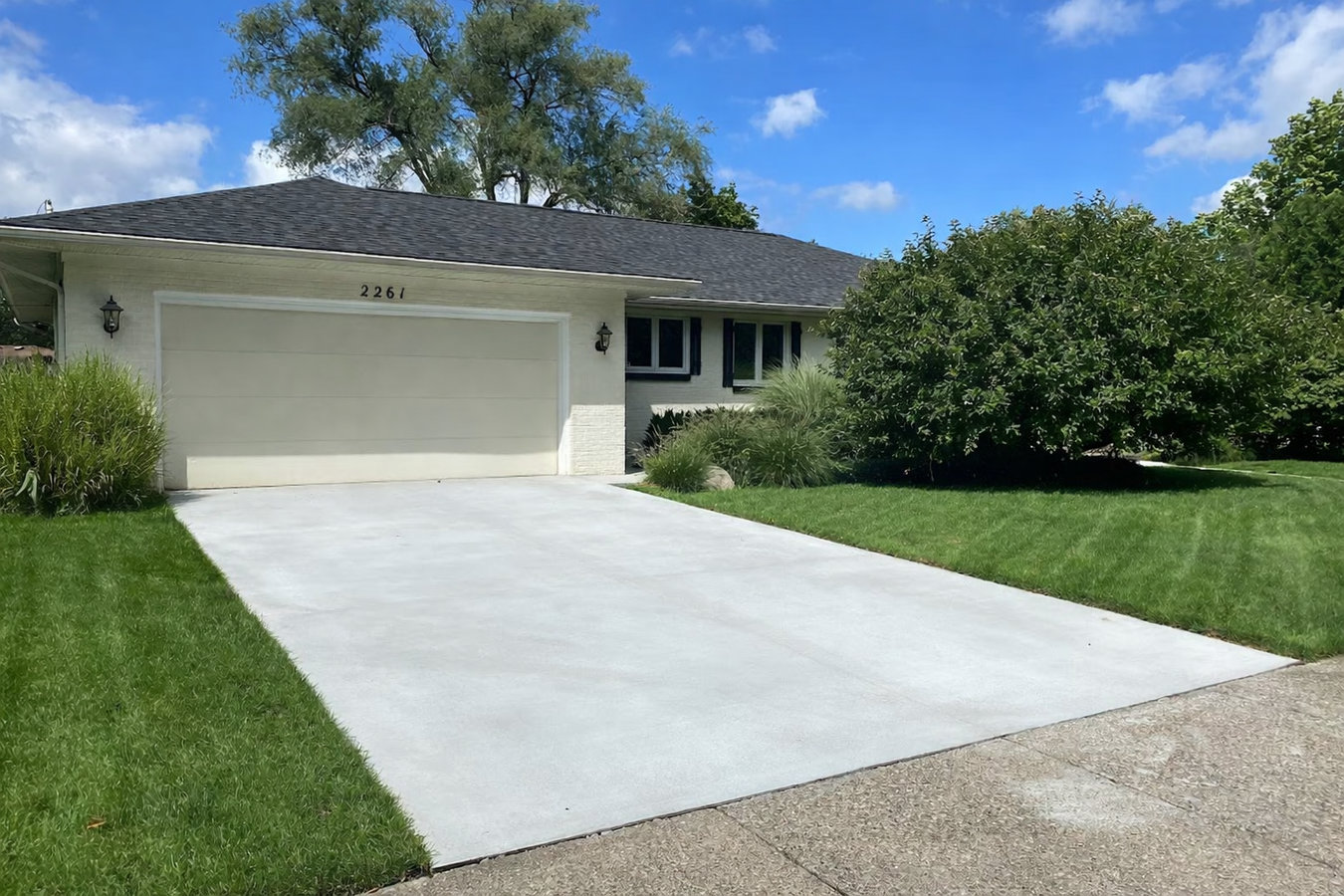
Most Palm Coast driveways were poured during the ITT development era in the 1970s and 1980s, and they are now 40 to 50 years old on sandy coastal soil that has been shifting under them ever since. Cracked sections, sunken panels, and surface spalling are common on homes of this age throughout the city. A replacement driveway poured on properly compacted base lasts for decades, not years. See our concrete driveway services.
Palm Coast's single-story ranch homes almost universally have screened rear lanais or open back patios, and the original concrete slabs on older homes are starting to crack and settle as the sandy sub-base underneath moves. A new poured concrete patio section handles Palm Coast's heavy afternoon downpours without washing out, and holds level far better than pavers on this soil type.
Palm Coast's warm climate means pools are used year-round, and the pool deck surfaces on older homes are often original to the 1970s or 1980s construction - which means they have had decades of sun, moisture, and foot traffic working on them. A resurfaced or newly poured pool deck around your Palm Coast pool gives you a safe, level, non-slip surface that handles the humidity and heat here without cracking or lifting.
Palm Coast's canal-adjacent neighborhoods sit on particularly moisture-laden soil that requires careful attention to drainage and base compaction before a slab is poured. For additions, detached garages, or new construction in these areas, a properly poured slab that accounts for the local soil and moisture conditions is the difference between a foundation that stays flat and one that cracks within a few years.
Front entry steps on Palm Coast's older homes deal with the same sandy soil movement as driveways and patios - and when front steps shift or crack, they become a safety issue. Whether you need a simple two-step entry replaced or a full set of garage landing steps rebuilt, properly formed and poured concrete steps hold their position far longer than pre-cast alternatives on shifting sub-base.
Homes that back up to Palm Coast's canal network often deal with slow soil erosion where the yard slopes toward the water over the years. A poured concrete retaining wall at the canal edge or yard boundary stops that grade loss, stabilizes the yard, and keeps the moisture and soil separation that canal-adjacent properties need to protect their foundations and landscaping long-term.
Palm Coast was built almost entirely between 1970 and 2000 as a master-planned community developed by ITT Community Development Corporation. That concentrated build window means a large portion of the city's driveways, patios, walkways, and slabs were poured in the same two or three decades - and many of them are now 40 to 50 years old. That is not just cosmetically tired concrete. It is concrete poured on sandy coastal soil with sub-base standards from a different era, that has been through forty or fifty Florida wet seasons, and that in many cases sits adjacent to the city's extensive canal system. The canals are one of Palm Coast's most distinctive features - and for homeowners whose backyards slope toward them, the constant moisture gradient in the soil creates ongoing drainage and erosion challenges that affect concrete flatwork differently than in drier inland areas.
Palm Coast's sandy soil shifts and settles more than homeowners expect, particularly during the dry stretches between wet seasons when the sub-base dries out and contracts. That movement is the primary reason cracked driveways and uneven walkways are so common throughout the city's original residential sections. The City of Palm Coast Building Department requires permits for new concrete pours and structural work, and working within that process correctly protects homeowners both at inspection and at the time of sale. Palm Coast is also a hurricane-risk market: after storms like Hurricane Matthew in 2016 and Hurricane Irma in 2017 moved through the area, driveway, pool deck, and flatwork damage was widespread across the city's older neighborhoods.
Our crew works throughout Palm Coast regularly, and we pull permits through the City of Palm Coast Building Department on jobs that require them - which is most new concrete pours. The city is laid out in a series of lettered residential sections (B, C, F, R, and others) that run along Palm Coast Parkway, Belle Terre Parkway, and Palm Harbor Parkway. The older sections closest to the original ITT development make up the bulk of our work here: driveways, patios, and pool decks that are 40 or 50 years old on sandy soil that has been moving under them since they were poured. We assess sub-base conditions and drainage carefully on every Palm Coast job before we form and pour, because skipping that step is the reason so much of the original concrete here is failing now.
Canal-adjacent properties in Palm Coast require extra attention to drainage and moisture management at the perimeter of any concrete work. We account for the higher moisture levels in the soil near the city's canal system when we plan base preparation, because a driveway or patio that does not account for that moisture gradient is going to show problems sooner than one that does. Homes in newer areas like Grand Haven are a different profile from the original sections - newer construction, different materials, different maintenance needs - and we adjust our work accordingly.
Palm Coast sits in Flagler County, and the small beach town of Flagler Beach, FL is just to the east - the closest Atlantic beach for most Palm Coast residents. Washington Oaks Gardens State Park is just south of the city along the Matanzas River, and many of the neighborhoods between Town Center and the park boundary are single-family ranch homes that represent some of the most common concrete work we do in Flagler County. We also serve Ormond Beach, FL and communities along the coast in both directions.
We respond within 1 business day. Tell us what you need and your address, and we schedule a free site visit at your convenience - no commitment required.
We check the existing concrete, sub-base condition, drainage slope, and proximity to any canals or drainage features, then give you a written estimate that breaks out every cost line. You know exactly what you are paying for before we start.
If your project needs a City of Palm Coast building permit, we handle the filing. Most permits take one to two weeks. You get a confirmed start date in writing once the permit is approved.
We arrive as scheduled, complete the work, and clean the site before we leave. You get a walkthrough and written curing instructions so you know exactly when the surface is ready for cars or foot traffic.
We serve Palm Coast homeowners across all sections of the city - from the original ITT-era neighborhoods near Palm Coast Parkway to the newer communities near Grand Haven. No pressure. Just an honest assessment and a written estimate.
(386) 284-1728Palm Coast is Flagler County's largest city and one of Florida's fastest-growing communities, with a population that has grown from around 32,000 in 2000 to more than 90,000 in the early 2020s. The city was developed by ITT Community Development Corporation starting in the early 1970s as a planned residential community, and that origin story is still visible in the city's layout today - its lettered residential sections, its network of freshwater canals running through neighborhoods, and its uniform stock of single-story ranch and modified ranch homes on modest wooded lots. Most of the housing in Palm Coast was built between 1970 and 2000, putting the bulk of the city's homes squarely in the 25-to-50-year age range where roofs, driveways, and flatwork begin to show their age. The Town Center at Palm Coast along Palm Coast Parkway serves as the city's commercial and civic hub, where residents go for shopping, dining, and city services.
Palm Coast sits in northeast Florida between Daytona Beach to the south and St. Augustine to the north, with the Atlantic Ocean and Flagler Beach just to the east. The city is bordered by state and national forests to the west and south, which gives even the densely developed sections a wooded, semi-rural feel. Many neighborhoods are separated by stretches of pine flatwoods, and mature trees are common throughout the residential sections. The city's canal system - maintained by the Palm Coast Stormwater Division - runs through a large number of residential blocks, and homes with canal-frontage yards are throughout the city. Neighboring Flagler Beach, FL is where most Palm Coast residents head for the beach and is another community we serve on a regular basis.
Call us today or request a free estimate online. We serve all Palm Coast neighborhoods and respond within 1 business day.